

Pilot Episode, American IPA
Our first beer: an all-grain American IPA kit from The Homebrew Shop, on Alan’s kettle. Tasty, a little too bitter, and a lesson in dry hopping.
- Method
- All-grain
- Status
- All gone
- Started
- Bottled
- Ready
The numbers
- Original gravity
- 1.052
- Final gravity
- 1.011
- ABV
- 5.4%
- Attenuation
- 79%
- Batch size
- 21L
- Per 100ml, estimated
- 48kcal
- Per 500ml bottle, estimated
- 240kcal
ABV and attenuation come from our hydrometer readings. Calories are worked out from the gravities. Anything marked estimated is a calculation rather than a measurement.
Brew day
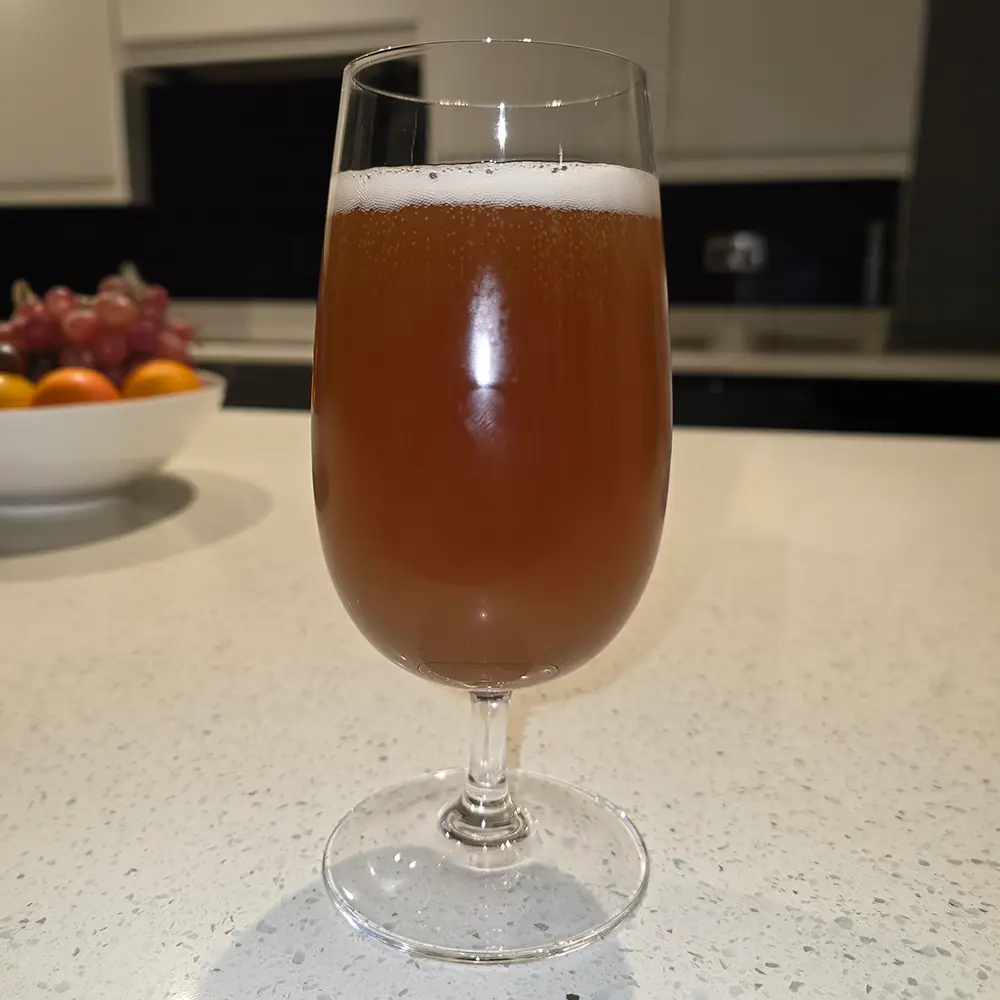
Our first beer, and the first time I fired up Alan’s kettle, the day after starting a small wine kit to learn the ropes. Rather than write a recipe of our own straight away, we went with an all-grain mash kit from The Homebrew Shop in Farnborough, their American Double Hopped IPA, at £27.60 for everything but the water. The malt comes crushed and weighed, 5.6kg of Maris Otter, cara malt, pale rye and Munich, with a bag of hops for the start of the boil, another for the last half hour, 100g of US leaf hops for dry hopping and a copper finings tablet. The kit doesn’t name its boil hops, so they’re listed here by their bags.
The mash
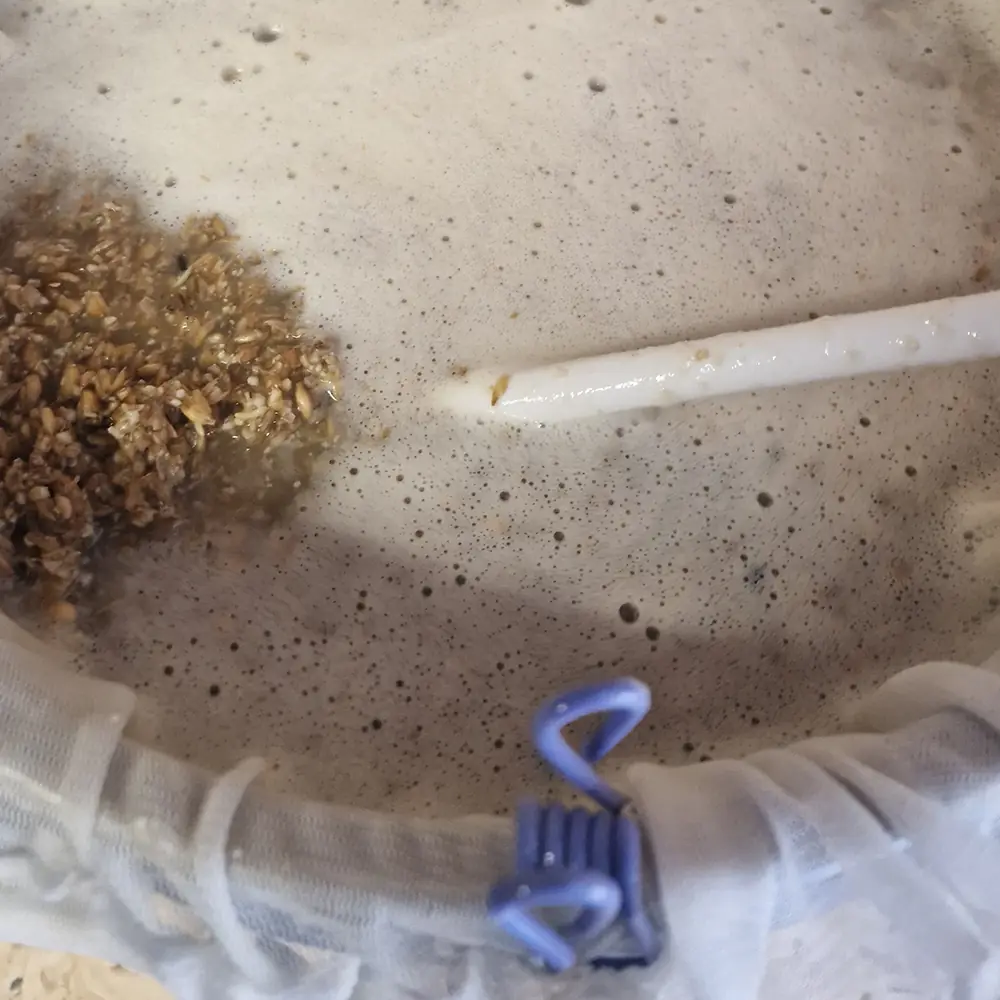
I mashed in at 11:54 with about 23 litres of water and held it at the kit’s 66°C for the hour, stirring every twenty minutes (12:14, 12:34 and 12:54), then raised it to 75°C for a ten-minute mash out. The mash finished at 13:09. I kept an eye on the kettle’s own thermometer and checked it against a separate dip thermometer, and the temperature held steady the whole way through. I was really impressed with how consistent Alan’s kettle was, and really happy to have hit every step.
The kit asks for 13 litres of sparge water on the shop’s own equipment; I used 5, and noted afterwards that it should have been nearer 10.
Lifting the grain bag up and out of the kettle to sparge was messy: wort leaked all over the bench and down the sides of the kettle. That’s when I realised I needed a better way. Some of Klarstein’s newer kettles have a proper grain basket that you lift and lock into place to sparge, but Alan’s model doesn’t, so I came up with a DIY version: a large plastic trug with holes drilled in the bottom, which sits over the top of the kettle and takes the bag while I sparge. Its first outing was our Pilsner.
The boil
The boil started at 13:36, and the first bag of hops went straight in for the full hour. The second went in at 14:06, thirty minutes from the end. The boil finished at 14:36, which is also when I remembered the copper finings tablet: it should have gone in ten minutes earlier. (Oops.) I think that’s part of why the beer stayed so hazy.
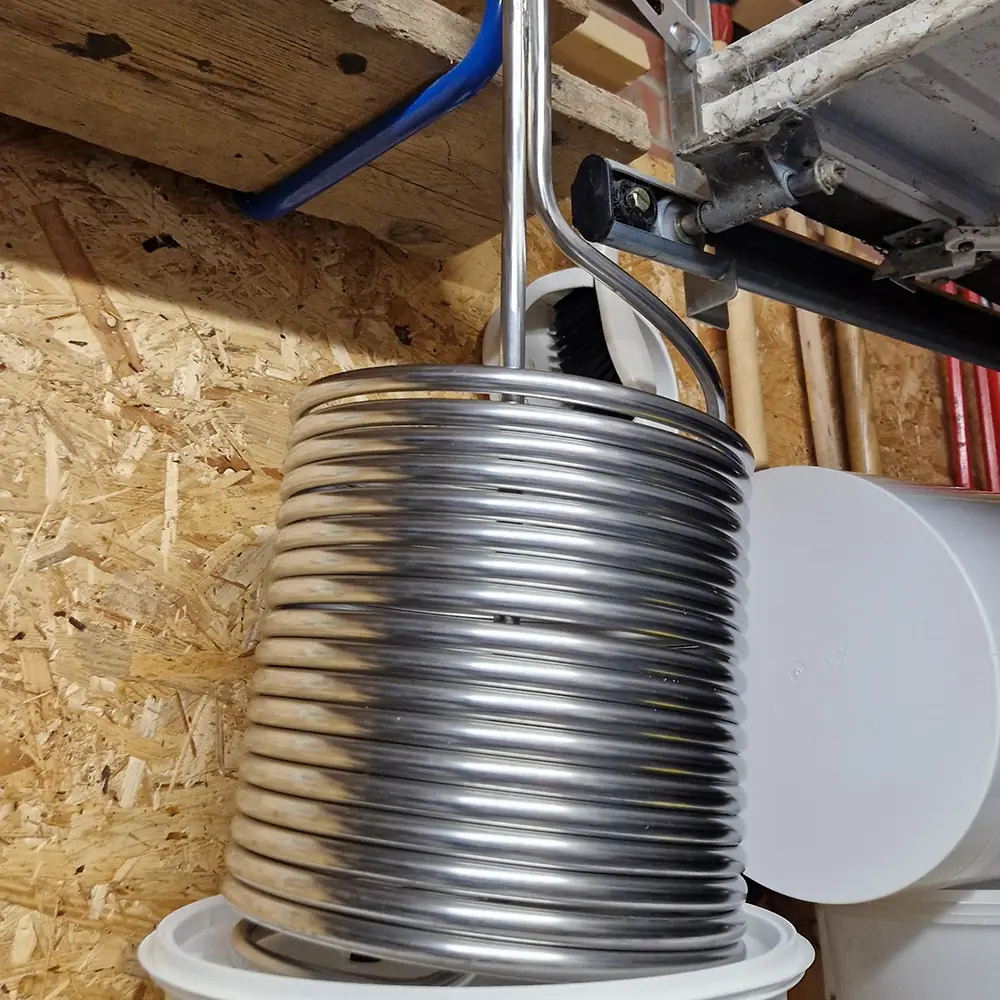
I didn’t know how much this kettle boils off in an hour, which made for a nervy afternoon watching the level. Then, when it came to cooling, the new wort chiller’s fittings didn’t fit my hose, so there was a dash to Screwfix for adapters mid-boil. I have no idea how Alan cooled his brews without a chiller! Between the boil and the cooling we lost a couple of litres, so about 21 made it through to the fermenter.
Fermentation
The wort was down to 20°C by 15:45, when I pitched the whole 10.5g packet of dried yeast (Mangrove Jack’s M66 Hophead, if I remember rightly) and, as the instructions said, the dry hops. It started at 1.052, a little under the kit’s 1.056. A blanket throw and a thermostatic heat belt kept the fermenter at 20°C.
Fermentation was done by the 19th, reading 1.011, and it was still 1.011 on the 21st. Then came a “no idea what I’m doing” moment: the cold crash. I put the fermenter in a fridge with no temperature control and left it there, until I read that cooling can pull a vacuum and suck the sanitiser out of the airlock into the beer. I panicked and took it out three days later, on the 24th. I never recorded its temperature, and it wasn’t in there long enough to do much, so it was fairly pointless.
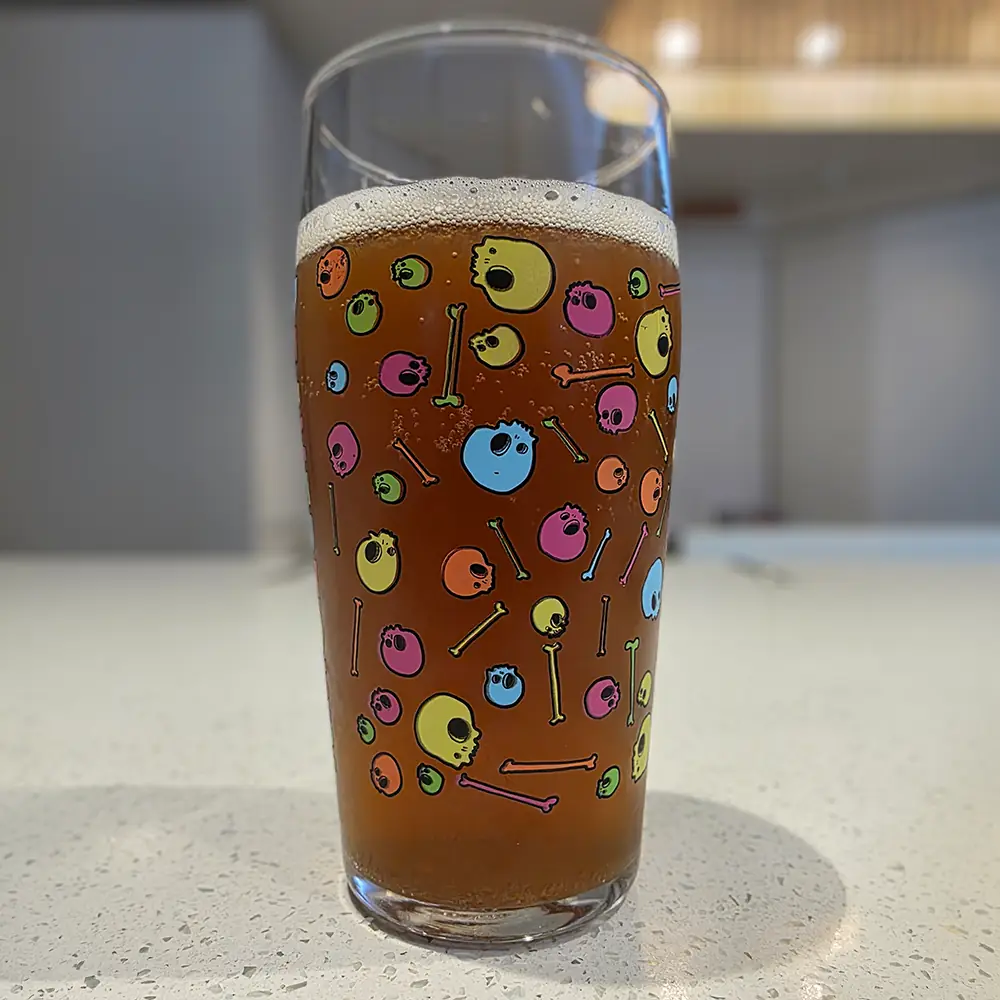
Back at 20°C, it rested for another couple of weeks, and on 9 October it went into bottles with two carbonation drops in each 500ml bottle: 42 bottles in all. Since then I’ve bought a second fridge and two Inkbird temperature controllers, so the next cold crash can be done properly.
More photos
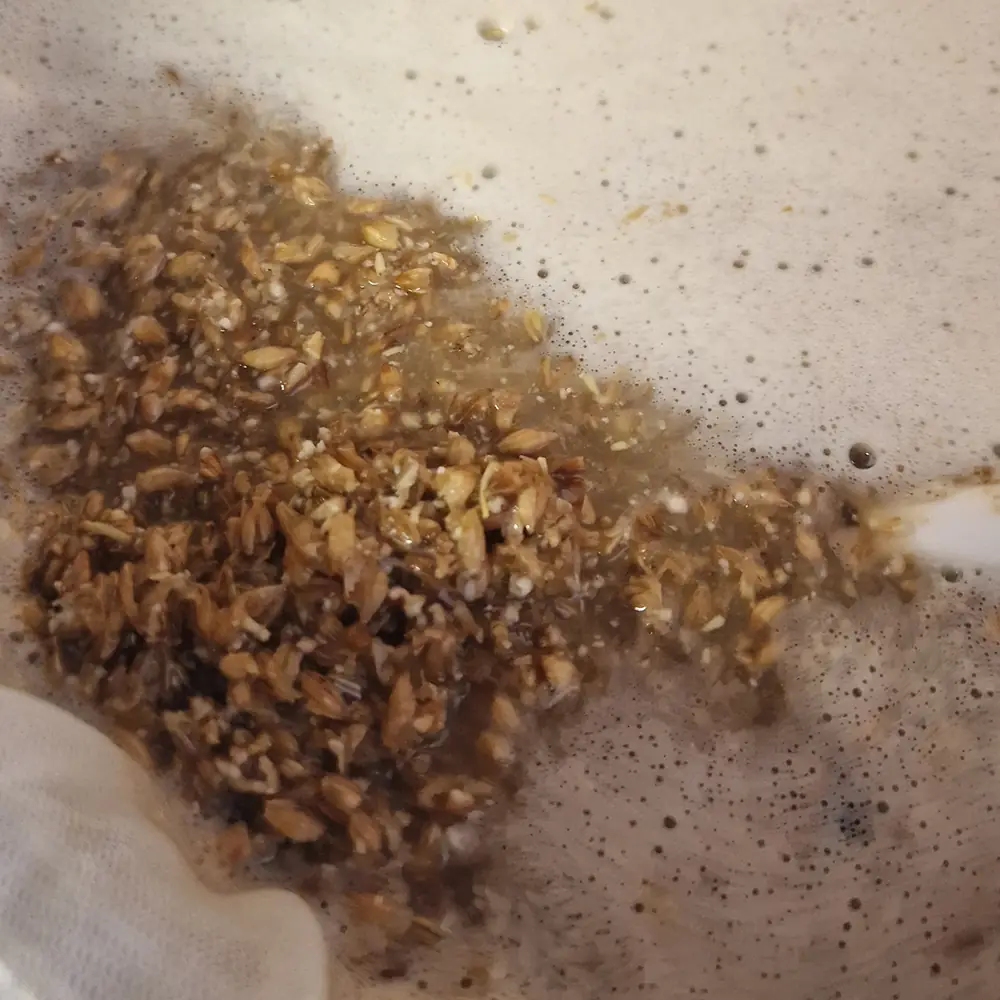
The grain, mashing in, 2025 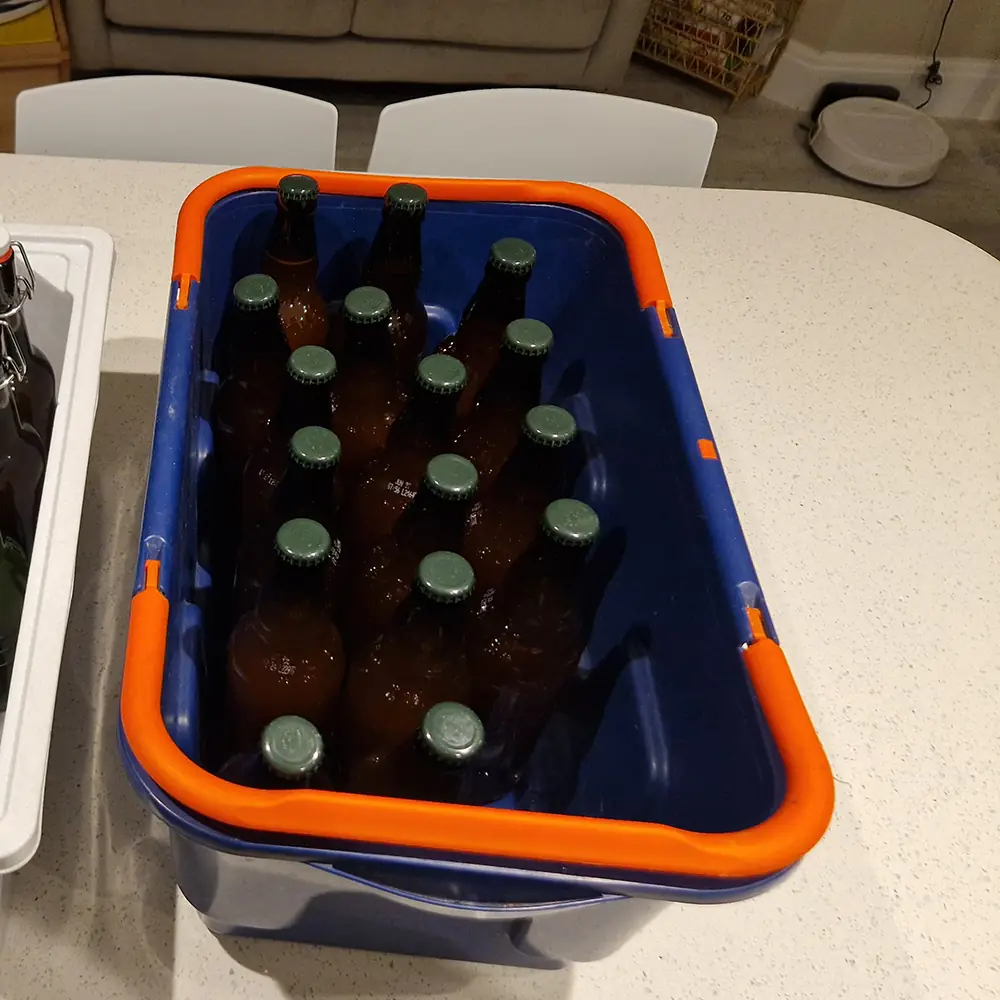
Capped and crated, 2025 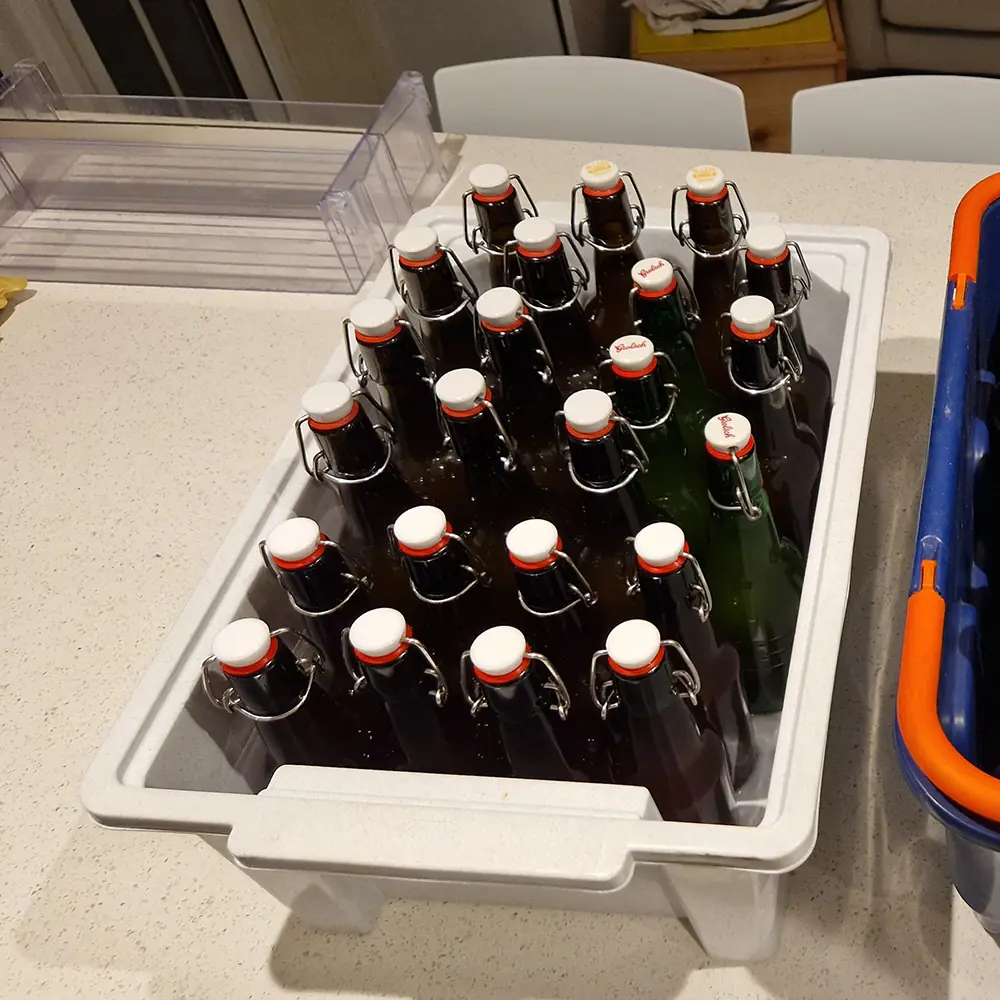
Swing-tops, sealed, 2025 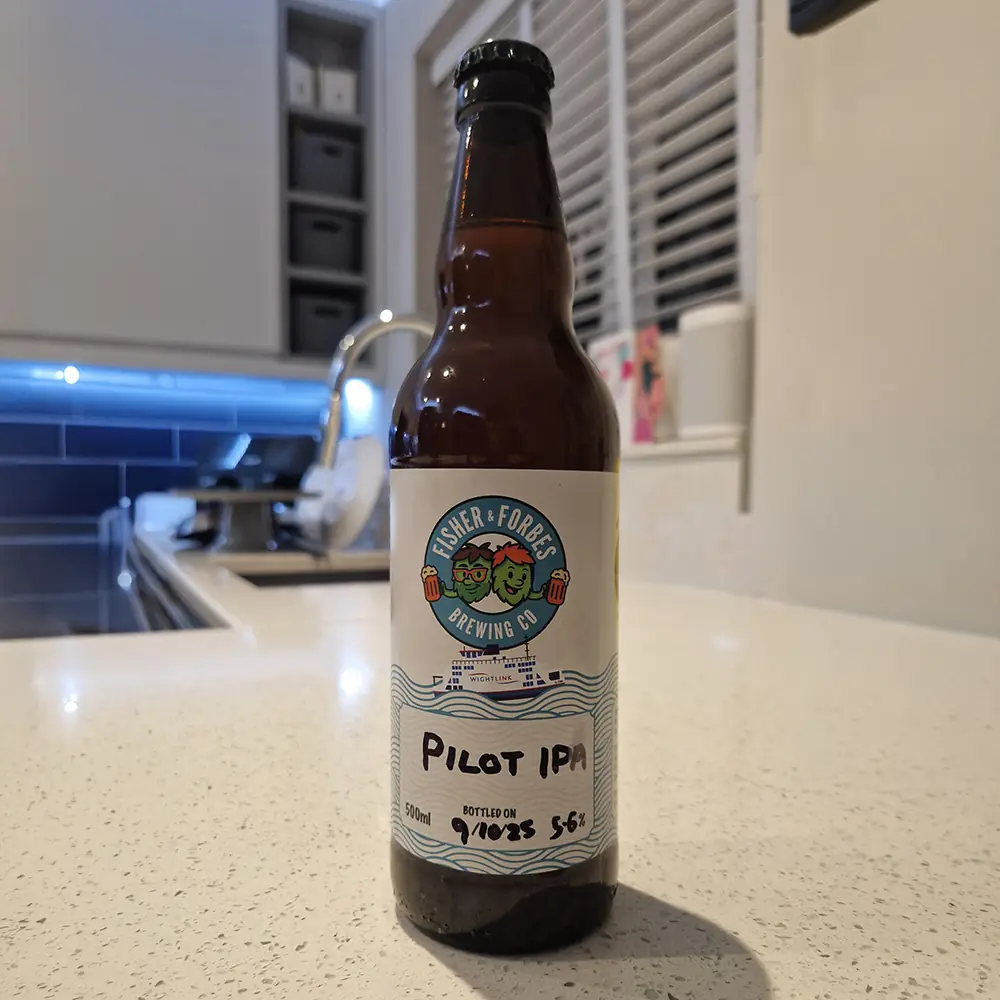
Labelled up, 2025
From start to bottle (25 days)
- 1.052Brew day, 14 September 2025
- 1.011Day 5, 19 September 2025: fermentation finished
- 1.011Day 7, 21 September 2025: steady; cold crash started
- Dry hopped: day 0
- Bottled: day 25
- Ready: day 46
Recipe
Kit: The Homebrew Shop American Double Hopped IPA all-grain mash kit
| Ingredient | Amount | When |
|---|---|---|
| Crushed malts: Warminster Maris Otter, English cara malt, pale rye and Munich | 5.6kg | Mash |
| Bag C hops | 20g | 60 min boil |
| Bag D hops | 20g | 30 min boil |
| US leaf hops | 100g | Dry hop, day 0 |
| Mangrove Jack’s M66 Hophead (we think) | 10.5g packet | Pitched at 20°C |
| Copper finings tablet | 1 | End of boil, 10 minutes late |
- Mash
- 66°C for 60 min, then 75°C for 10 min
- Boil
- 60 min
- Fermentation
- 20°C for 7 days, then cold crash (a fridge with no temperature control) for 3 days
- Priming
- Carbonation drops, 2 per bottle
- Bottles
- 42 × 500ml
Tasting notes
- October 2025Interesting and tasty, and it went down well, but there’s a bitterness that shouldn’t be there. We think the dry hops sat in the beer for too long.
What we’d change
Add the copper finings tablet ten minutes before the end of the boil, not after it. Dry hop later in fermentation, whatever the instructions say. Work out how much this kettle boils off, so there’s less panic next time. Check the wort chiller fits the hose before brew day, rather than dashing to Screwfix for adapters mid-boil. And cold crash properly: at a set temperature, for long enough to make a difference.
- Brew it again?
- Yes
- Our rating
Kit used
- Klarstein Füllhorn 30L mash kettle, Alan’s
- Klarstein Maischfest 25L fermenter, Alan’s
- Demijohn corks
- Grain bag, Alan’s
- Grain bag clips
- Silicone oven gloves
- Plastic brewing spoon, Alan’s
- Nylon hop bags, Alan’s
- Hop filter basket
- Glass marbles
- Food bag clips
- 5L jug
- Stainless steel wort chiller, 15m
- Thermostatic heat belt
- Three-piece airlocks
- Large auto siphon (56cm)
- Tubing, Alan’s
- Plastic bottling bucket
- Thermometers, Alan’s
- Stick-on fermentation thermometers
- Hydrometers, Alan’s
- Bottling wand, Alan’s
- 500ml crown-cap bottles
- 500ml swing-top bottles
- Crown caps
- Bottle capper, Alan’s
- VWP cleanser
- Chemsan
- Spray bottles
- Sponge scourers
- Bottle brush, Alan’s
- Bottle rinser
- Bottle tree